Meta releases Llama 3 open models and safety tools
Meta released Llama 3 8B and 70B pretrained and instruction-tuned models, alongside Llama Guard 2, Code Shield, and CyberSec Eval 2 resources.
By Hypler editorial team · Source: Meta AI.
Original source date: .
Hypler publication: . Hypler updated: .
Estimated reading time: 5 minutes.
Topics: open-weights, Llama, safety-tools

An open ecosystem claim
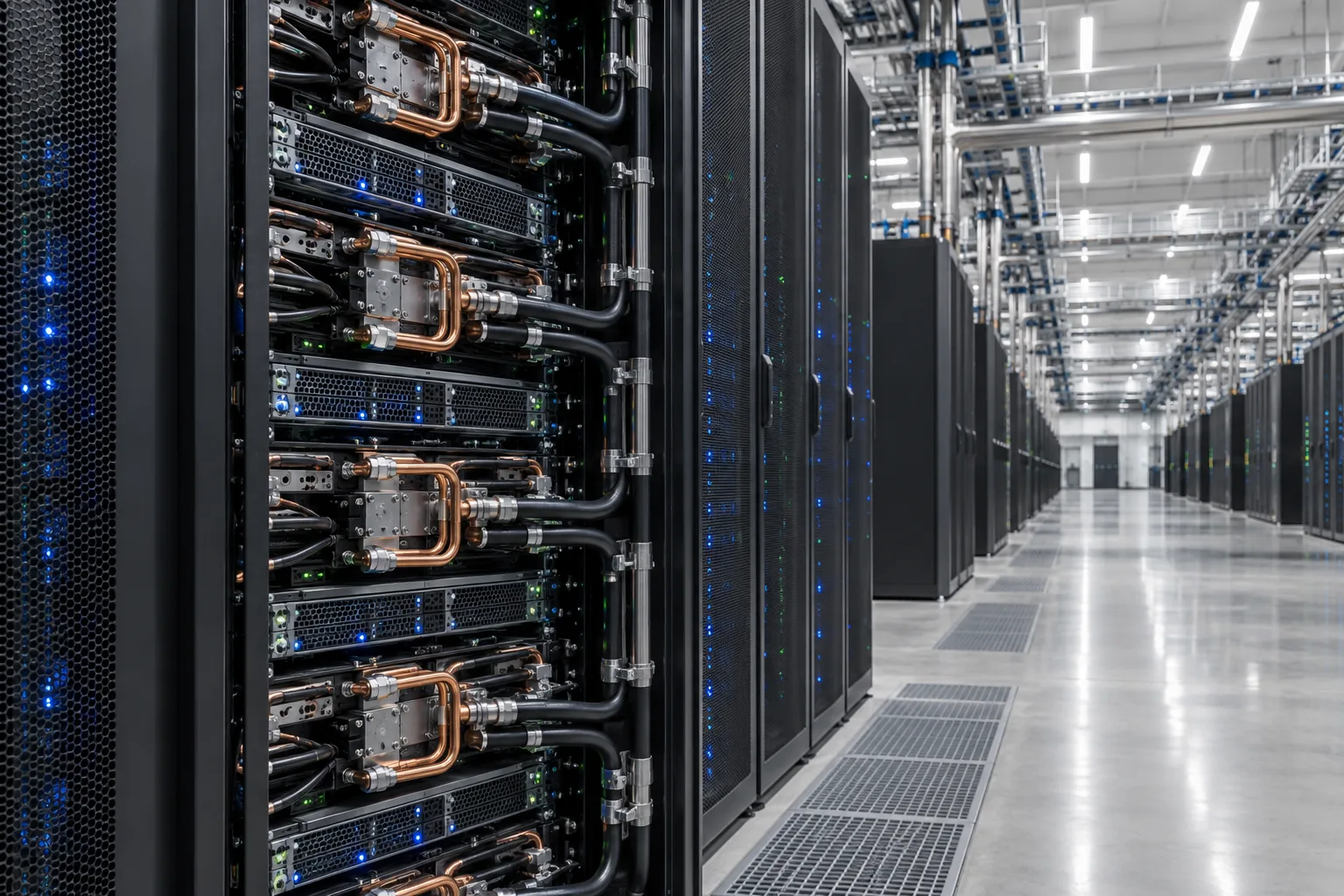
Meta announced Llama 3 8B and 70B pretrained and instruction-tuned models on April 18, 2024, accompanied by Llama Guard 2, Code Shield, and CyberSec Eval 2 resources. The post described an open ecosystem and availability through multiple platforms. It also left the operative boundary where it belongs: the model license, platform terms, and infrastructure selected by each operator. The announcement describes a historical release, not a proof of present access or a universal deployment recipe. “Open” changes who can assemble a system; it does not remove the need to decide which artifact is used, who may reach it, how it is maintained, or what happens when its output is unsafe or invalid.
Control moves inward
A managed endpoint places some capacity, patching, and account controls behind a provider relationship. A self-hosted or privately served route brings more of those decisions into the adopter’s own operating model. That can be useful where a team needs a particular deployment shape, yet it creates work across artifact provenance, host security, access control, retention, monitoring, incident response, and updates. The question is not whether one model-hosting arrangement is inherently superior. It is whether the organization can assign and evidence every responsibility its chosen arrangement creates. A route that has no owner for patching or rollback has a governance gap even if the underlying model performs well on a test prompt.
Treat the bundle as the unit
A credible record names more than Llama 3. It binds the weight artifact and license input to the tokenizer, instruction variant, quantization or serving build, prompt template, safety classifier, retrieval index, and serving image. Those components can change outputs independently, which makes a bare model-family label too coarse for reproduction. The same separation protects authority: generating text does not confer permission to read a record, call a tool, or commit a result. Hypler can apply that discipline in public technical analysis without suggesting that it operates a particular Llama deployment. The article’s point is architectural: a model route is a versioned package inside an application boundary.
What a release gate proves
Before an operator promotes an open-weight route, evidence should cover the artifact identifier, license-review owner, serving revision, access boundary, evaluation corpus, monitoring plan, and rollback bundle. Tests should show that unauthorized callers cannot reach the service, a tokenizer or prompt change triggers reevaluation, safety denials are visible, and load produces bounded backpressure instead of lost requests. Representative concurrency matters because a parameter count does not establish memory use or response behavior under a real queue. Meta’s Llama 3 announcement broadened the available ingredients. The reasoned judgment is that deployment freedom is valuable only when it is matched by an equally concrete maintenance and accountability plan.
Hypler analysis
Hypler’s view
Open weights move more responsibility into the adopting system. Hypler should evaluate an artifact bundle, access boundary, maintenance owner, and evidence path together instead of treating a model name as a deployment plan.
Hypler technical analysis
Engineering notes
open weights shift responsibility from a hosted provider boundary toward the operator’s deployment, license, model artifact, serving stack, safety resources, and patch cadence. The engineering unit is therefore a reproducible model package, not simply a model name. It should bind exact weight provenance, license review input, instruction variant, tokenizer and serving revision, hardware or isolation assumptions, safety classifier configuration, and evaluation corpus revision. The accompanying safety tools can inform testing, but they must be versioned and measured in the same environment as the intended workflow. Without a maintenance owner, a private model route can silently diverge through stale artifacts, changed dependencies, or unreviewed infrastructure behavior.
What to inspect
- Model artifact manifest
- Inspect weight source, exact revision, license record, instruction variant, tokenizer, serving image, safety-resource revision, owner, and rollback artifact.
- Private evaluation corpus
- Run approved, unsupported, unsafe, and adversarial prompts against the deployed stack; inspect outputs and safety decisions with configuration identifiers.
- Maintenance drill
- Simulate a serving dependency or safety-model change and verify an owner can identify affected deployments, reproduce results, and revert the full package.
Scope and limits. Open availability does not remove license, platform, infrastructure, or maintenance obligations, and published safety resources do not by themselves prove safe application behavior.
Terms and definitions
- Inference
- Using a trained model to produce an output from new input.
- Evaluation
- A repeatable method for measuring a system against defined quality, safety, or task criteria.
- LLM
- Large language model: a machine-learning model trained to predict and generate sequences of tokens.
- Context Window
- The maximum amount of input and generated content a model can consider in one request.
- Meta releases Llama 3.1 including a 405B model
Meta announced Llama 3.1 models at 8B, 70B, and 405B parameters, describing multilingual support, a 128K context window, and reference materials for agent systems.
- Mistral releases Mistral Small 3 under Apache 2.0
Mistral announced Mistral Small 3, a 24B-parameter model released under Apache 2.0 and positioned for low-latency generative AI tasks.
- AWS announces Amazon Nova models in Bedrock
AWS announced Amazon Nova models in Bedrock across text, multimodal, image, and video tasks, with regional access and account configuration boundaries.
Original source
Historical source briefing with Hypler engineering analysis. Source details reflect the original publication date; implementation examples are hypothetical. Technical analysis expanded October 24, 2026; this does not change the original source event or establish a new source verification. Editorial prose revised October 26, 2026; original event, publication and source-check dates are retained.