Mistral releases Mistral Small 3 under Apache 2.0
Mistral announced Mistral Small 3, a 24B-parameter model released under Apache 2.0 and positioned for low-latency generative AI tasks.
By Hypler editorial team · Source: Mistral AI.
Original source date: .
Hypler publication: . Hypler updated: .
Estimated reading time: 5 minutes.
Topics: open-weights, Mistral, local-inference

A small-model proposition
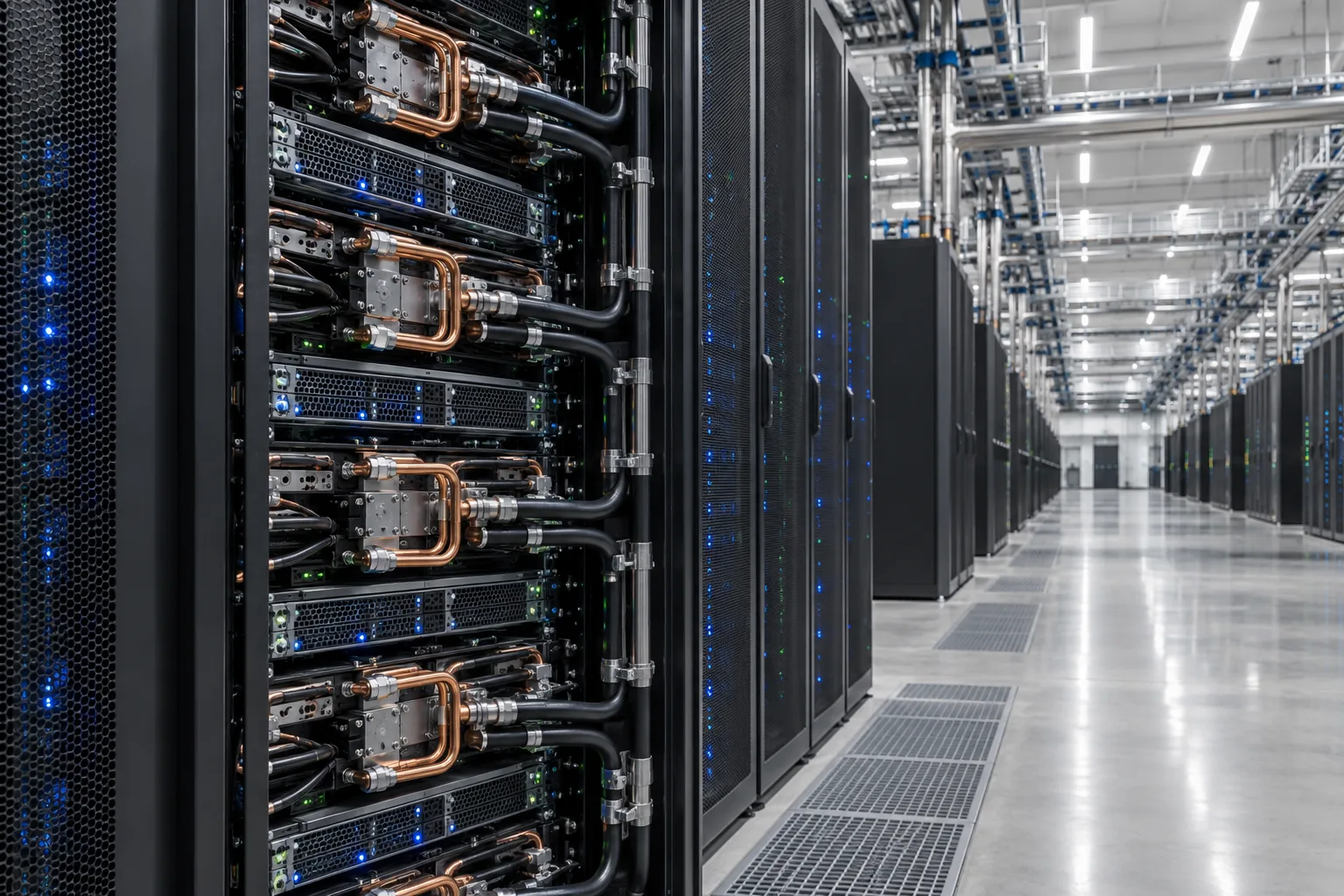
Mistral AI announced Mistral Small 3 on January 30, 2025 as a 24B-parameter model released under Apache 2.0 and positioned for low-latency generative AI tasks. The announcement discussed local deployment suitability and comparative performance. Those statements identify a candidate for evaluation; they do not certify performance, safety, pricing, or availability for a particular host and workload. The dated release should remain separate from local operational claims. A team that considers the model still has to establish which exact artifact and serving configuration it will use, how customer material is handled, what the target machine can sustain, and who responds when the local route is unavailable or produces an invalid result.
Local control has a workload cost
Local inference can change latency and data-handling choices, but it also turns capacity and maintenance into direct responsibilities. A model that fits in memory at startup may create pressure when requests overlap, contexts grow, or a build and editor compete for resources. Quantization, tokenizer, runtime version, prompt contract, and serving image can each affect output or throughput. The relevant question is therefore not whether local deployment sounds efficient. It is whether a particular host can preserve its ordinary work while delivering a bounded service for a defined task. If that premise fails, a low-latency positioning claim has little value to the person waiting for a result or using the machine.
Define the host envelope
A local route should state the machine and operating conditions it expects: memory allowance, context and prompt-size budget, active-request limit, queue policy, hardware profile, and cancellation behavior. The reproducible bundle should bind weight checksum, tokenizer, quantization format, runtime, system prompt, safety filters, and adapter revision. That is more precise than naming Mistral Small 3 alone, and it makes later regressions diagnosable. A service wrapper can preserve response shape and interruption semantics while the underlying runtime changes, provided those changes trigger the same evaluation discipline. The bundle also separates licensing review from runtime behavior: Apache 2.0 may govern an artifact, while privacy, safety, and authorization duties still arise from the application around it.
Pressure reveals the real failure path
Local capacity failures seldom announce themselves cleanly. Thermal pressure, cache corruption, stale artifacts, memory exhaustion, and queue growth may appear as erratic latency or a process that restarts mid-request. Retrying automatically can make an already pressured host worse. A system needs to distinguish a failed inference from a completed result that was lost before delivery, and it should leave interrupted jobs in a visible state rather than pretending they were rejected or completed. Crash reports should avoid unnecessary private source text. These details have product consequences: users can decide whether to wait, cancel, or resubmit only when the service describes what happened and does not hide a capacity problem behind a generic answer.
A workstation keeps its first job
Consider a hypothetical Hypler offline tagging worker using a pinned local image and synthetic records. It accepts one analysis job while reserving capacity for the operator’s editor and build tools. A second job enters a visible queue instead of starting another inference. When a memory-heavy build begins, the scheduler stops admitting new work and offers cancellation of queued items. An uncertain tag goes to review; an interrupted job can restart only after its owner confirms the source revision is still current. The partially produced result remains marked unfinished. This example does not assert a live local deployment. It illustrates a design that protects the operator’s normal work rather than treating unused memory as permanent model capacity.
Readiness is measured, not assumed
Before release, evidence should include cold start, degraded hardware, artifact mismatch, malformed output, overload, interrupted streaming, process restart, and rollback to a prior measured bundle. Sustained testing should run with the editor, build process, and serving runtime together, recording peak memory, queue wait, first response time, completion time, and quality after quantization. Long and oversized requests belong in the suite because they expose policies a short benchmark misses. Mistral’s announcement makes a local small-model route worth considering. The sound judgment is to approve it only when the target workload and the host’s ordinary responsibilities both remain usable under realistic contention, with an observable exit when they do not.
Hypler analysis
Hypler’s view
A smaller permissively licensed model can trade central service dependence for local operating duty. Hypler should assess the whole serving bundle and realistic contention, then choose explicit queue, interruption, and rollback behavior.
Hypler technical analysis
Engineering notes
a locally deployable small model changes where latency, data handling, and operational responsibility live. Evaluation must bind the intended runtime to its exact weights, quantization or serving configuration, hardware assumptions, input classification, output checks, and maintenance owner. A low-latency aim becomes useful only when measured against representative requests that include unsupported questions, malformed input, and safety-sensitive content; a narrow happy path cannot establish the operating envelope. Local deployment also makes outage and update behavior the operator’s concern. The controller should expose model unavailable, stale artifact, overload, and validation failure as distinct states so a fallback does not silently widen data exposure or reduce required review.
What to inspect
- Local runtime manifest
- Inspect weights, serving and quantization configuration, hardware assumptions, input classes, output validator, maintenance owner, and rollback artifact.
- Representative latency suite
- Run ordinary, long, malformed, unsupported, and policy-sensitive fixtures; inspect latency distribution, output validation, abstention, and failure classification.
- Update and overload drill
- Simulate a stale artifact, unavailable runtime, and queue overload; inspect that declared degradation occurs without an unreviewed external route or data expansion.
Scope and limits. Apache 2.0 licensing and local-deployment positioning do not establish performance, safety, or suitability for a particular workload or operating environment.
Terms and definitions
- Inference
- Using a trained model to produce an output from new input.
- Evaluation
- A repeatable method for measuring a system against defined quality, safety, or task criteria.
- LLM
- Large language model: a machine-learning model trained to predict and generate sequences of tokens.
- Context Window
- The maximum amount of input and generated content a model can consider in one request.
- Meta releases Llama 3.1 including a 405B model
Meta announced Llama 3.1 models at 8B, 70B, and 405B parameters, describing multilingual support, a 128K context window, and reference materials for agent systems.
- Meta releases Llama 3 open models and safety tools
Meta released Llama 3 8B and 70B pretrained and instruction-tuned models, alongside Llama Guard 2, Code Shield, and CyberSec Eval 2 resources.
- Mistral announces Mistral Large 2
Mistral announced Mistral Large 2, describing improvements in code, reasoning, multilingual work, function calling, and long-context tasks.
Original source
Historical source briefing with Hypler engineering analysis. Source details reflect the original publication date; implementation examples are hypothetical. Technical analysis expanded October 24, 2026; this does not change the original source event or establish a new source verification. Editorial prose revised October 26, 2026; original event, publication and source-check dates are retained.