Intelligence / Infrastructure / Autonomy

The infrastructure behind intelligent systems.

Hypler develops CPU-first decision support, semantic interoperability, agent workflow tools, distributed compute research, and governed execution infrastructure for intelligent software.

Hypler systems architecture, image 1 of 4

Intelligence is only one part of the system.

Models can propose actions. The surrounding software must track state, ground decisions in evidence, manage resources, and enforce permissions. Hypler develops infrastructure for those responsibilities.

Systems

Products and infrastructure

Each system has its own purpose, evidence, and development stage.

In development

Rangoon

Rangoon is a local-first workbench for building agent skills, composing workflows, and compiling saved revisions into inspectable instruction bundles.

Rangoon Compile screen from a synthetic layout test.

Planned operating-system targets

Linux, Windows, and macOS each require separate platform and architecture validation.

View all 12 planned targets

Each target is planned and requires separate qualification.

In development

LNSAT

CPU-first System One research for evidence-based technical review, with an optional Gateway for authorizing managed actions.

LNSAT evaluation harness architecture illustration.

Planned operating-system targets

Linux, Windows, and macOS each require separate platform and architecture validation.

View all 12 planned targets

Each target is planned and requires separate qualification.

In development

VUSL

An independent semantic language and experimental Rust core for checking what meaning is preserved, changed or unresolved across system boundaries.

Generated conceptual VUSL illustration.

AI systems and frameworks

VUSL has an independent experimental Rust core for semantic-fidelity checks. Rangoon is an intended consumer; application integration and alignment with System One/System Two workflows remain in development.

  • RangoonIntended consumer / Updates pending

    Workbench alignment and native consumer qualification remain pending.

  • OpenShellOffline source work

    Provider mapping work is in development.

  • LNSATIndependent evidence boundary

    Semantic review can inform a host workflow; LNSAT advice and Gateway authority remain separate from VUSL results.

Frameworks and native standards (7)
About VUSL →

Documented platform case study

IZIOS

Hypler-developed diamond data infrastructure connecting supplier inventory, product evidence, discovery, and reusable retail APIs.

IZIOS inventory operations, October 5, 2026.

Distributed compute research

LLM Monitor

Hypler researches scheduling, observability, and workload recovery across different execution environments.

Explore compute research

Conceptual architecture

From intent to execution

Explore each responsibility in a proposed workflow.

Conceptual architecture. Integration is in development.
Intent + evidence
  • Decision supportLNSAT System One
  • Semantic fidelityVUSL
  • Capability engineeringRangoon
  • Execution authorizationLNSAT Gateway
Compute · applications · receipts
  1. Intent

    A request defines the objective and the software environment involved.

  2. Context

    Observations and source records provide context for the decision.

  3. Local decision

    LNSAT System One explores which review path the evidence supports and when to abstain.

    Read about local decision
  4. Semantic fidelity

    VUSL checks declared mappings and supporting evidence across exact revisions.

    Read about semantic fidelity
  5. Capability

    Rangoon packages saved skills and workflows into inspectable instruction bundles.

    Read about capability
  6. Authorization

    The optional LNSAT Gateway checks policy and required approval for a bounded action.

    Read about authorization
  7. Compute and applications

    Compute research explores coordinating workloads across execution environments.

    Read about compute and applications
  8. Receipts and state

    Outcome evidence lets reviewers tell what happened and what needs reconciliation.

    Read about receipts and state

Engineering principles

Local intelligence
Measure what can run on a CPU close to the evidence.
Evidence before confidence
Trace recommendations to the records that support them.
Explicit authority
Apply policy and approval to the exact action being proposed.
Interoperability
Check how required terms and evidence survive a translation.
Measured performance
Publish results with workloads, comparators, and limits.
Incremental autonomy
Expand capability as evidence and operational controls support it.

Hypler Research

How much intelligence can run locally?

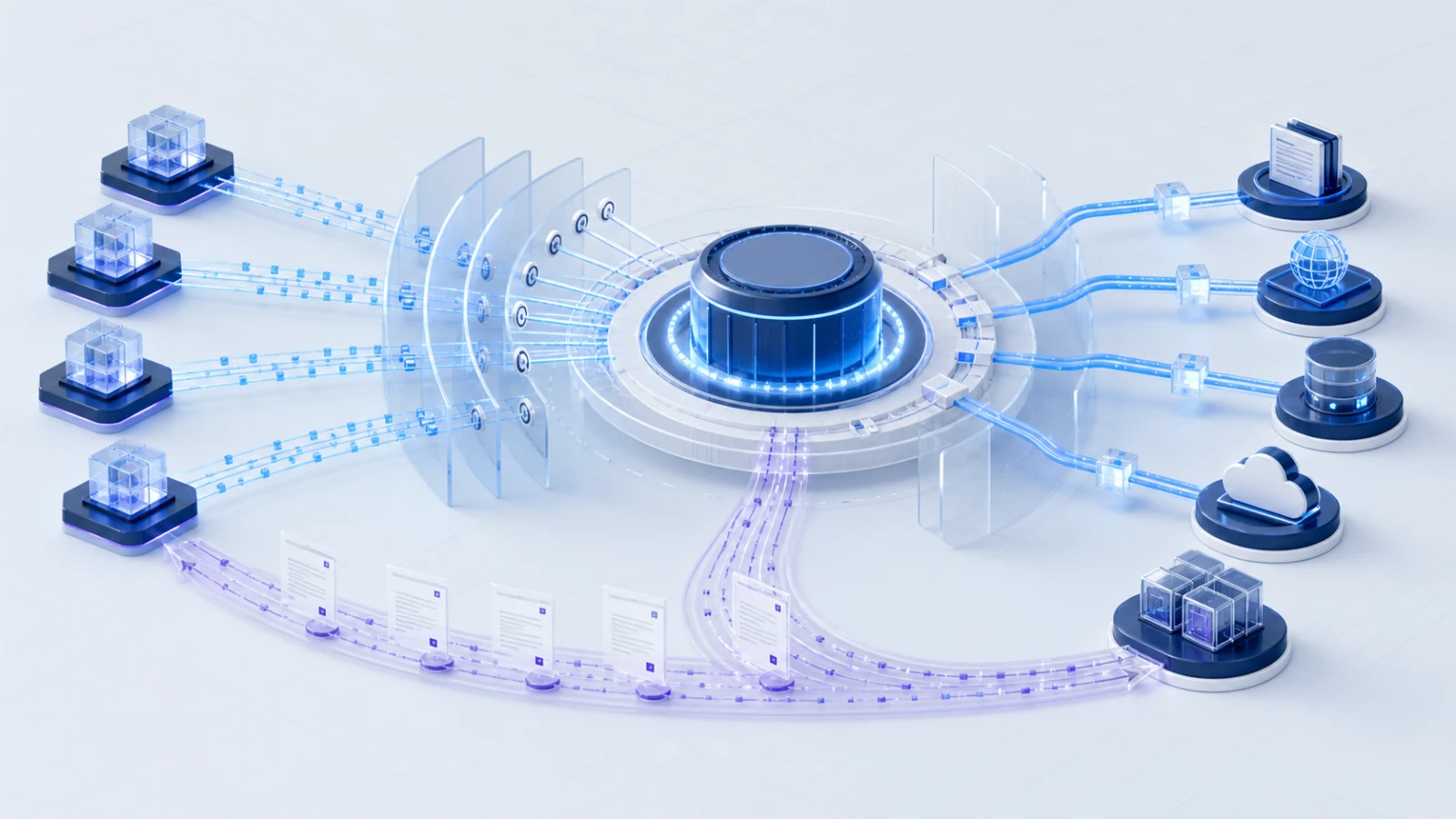
We investigate CPU-first decisions, semantic fidelity, local state, and distributed inference. Research notes document the question, method, and limits of the available evidence.

Explore research and evaluations

Applied engineering

Bring these principles to a real system

Enterprise engineering

Discuss model integrations, data pipelines, and workflows that require scoped approval and traceable results.

Explore engineering services

Research and partnerships

Discuss evaluation methods, interoperability, or a shared infrastructure problem.

Work with Hypler

Industry / Policy / Competition

SI engineering briefing.

AI hardware, models and policy through an American leadership lens. Source reports and Hypler analysis retain distinct dates and attribution.

Browse news