NIST publishes the AI RMF Generative AI Profile
NIST AI 600-1 is voluntary guidance for applying the AI Risk Management Framework to generative AI through Govern, Map, Measure, and Manage.
By Hypler editorial team · Source: NIST.
Original source date: .
Hypler publication: . Hypler updated: .
Estimated reading time: 4 minutes.
Topics: NIST, AI-RMF, governance
A framework arrives after the rush
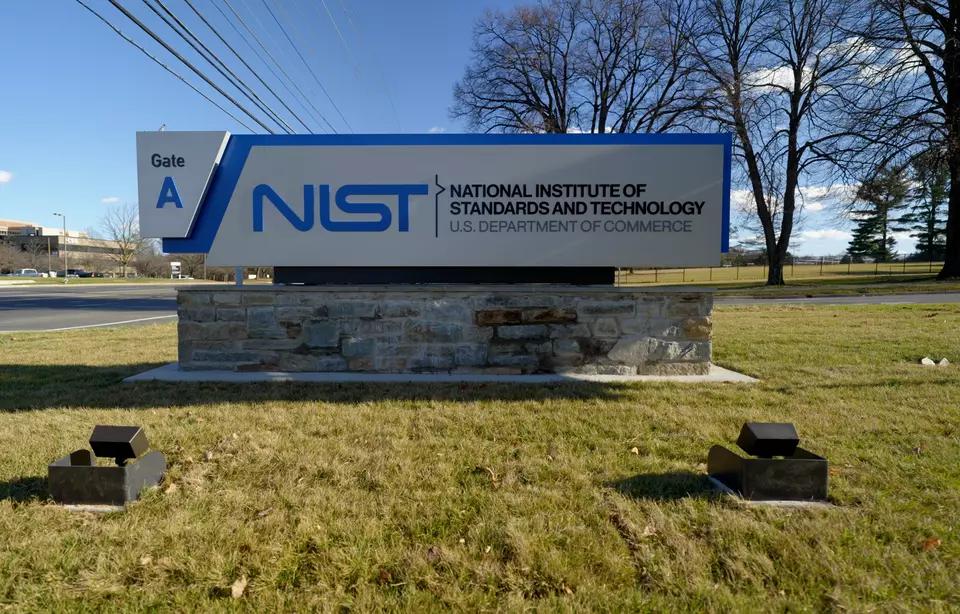
NIST published AI 600-1 on July 26, 2024, as a voluntary companion profile for applying its AI Risk Management Framework to generative AI. The publication organized risks and suggested actions across Govern, Map, Measure, and Manage. It was a cross-sectoral resource, not a certification program and not a prescription for one organizational design. That modest boundary is central to the story. A framework can give a team shared terms for a hard conversation, yet it cannot certify a deployment simply because its headings appear in a launch deck.
The gap between a profile and a product
Generative systems change in ways a static assessment rarely captures. A team may approve a model, then alter a prompt, broaden a retrieval corpus, swap a service, or attach a new tool. The paperwork can remain reassuring while the running path has become something else. AI 600-1 is most useful when it forces that tension into view: the profile describes a way to examine risk, whereas a product still needs to say which workflow changed, who accepted the change, and what evidence was reviewed.
Turning four functions into a record
The four functions lend themselves to an editorially plain account of responsibility. Govern names an owner and an escalation route. Map captures purpose, permitted inputs, tool permissions, and unacceptable outcomes. Measure preserves the cases used to test those promises. Manage records a release decision, a rollback condition, and what follows an incident. None of those records proves universal reliability. Together, they make it possible to compare an announced control with the particular model, source set, and execution path that were actually in use.
Where evidence breaks down
The trouble is often less dramatic than a system-wide failure. An aggregate quality score may fall without explaining whether retrieval missed a source, a prompt changed, a tool timed out, or a policy rule refused the request. A broad safety statement provides little help after that event. Evidence tied to a workflow revision does: it can preserve the input classification, selected evidence, tool request, validation outcome, and final response as distinct facts. The distinction lets a reviewer investigate the mechanism rather than argue from a green status label.
A hypothetical connector decision
Consider a hypothetical Hypler knowledge workflow. A reviewer proposes a source connector limited to a named document collection, excludes customer uploads, and selects a read-only search tool. Before activation, the workflow is tried against questions requiring citations, questions that should be declined for lack of evidence, and a simulated connector outage. The reviewer can then see whether the answer identifies its source, whether the outage is described as a bounded failure, and whether any tool call exceeded read-only permission. The example remains hypothetical; its value is in making review concrete.
A narrower claim, a stronger practice
AI 600-1 does not settle an organization’s thresholds, remediation dates, or risk appetite. It offers a structure for asking whether those choices can still be inspected after a release changes. That is a stronger editorial conclusion than treating the profile as a badge. A team that keeps its decisions, tests, exceptions, and rollback authority connected to a specific workflow can explain what it did and why. It also leaves later reviewers able to see which assumptions survived the change and which ones required a fresh decision. That visibility prevents a later release from borrowing confidence earned by an earlier, narrower configuration. A team that only repeats framework language may still be unable to account for the system in front of it.
Hypler analysis
Hypler’s view
The profile offers a durable vocabulary for evidence without establishing NIST approval or conformance. Teams can use it to connect a particular workflow, its revisions, and its failure record to accountable engineering decisions.
Hypler technical analysis
Engineering notes
AI 600-1 is useful when its Govern, Map, Measure, and Manage functions become records tied to a particular workflow revision. A risk framework cannot supply runtime facts after a model, retrieval corpus, prompt, or tool permission changes. A deployable record therefore joins workflow identity and owner to purpose, data classes, model and prompt revisions, source-set revision, tool allowlist, evaluation cases, release decision, and rollback owner. Scenario results need enough structure to distinguish unsupported output, source timeout, policy refusal, and formatter failure. That enables a reviewer to compare the stated control with the actual path instead of treating a completed checklist as a live guard.
What to inspect
- Workflow risk record
- Inspect stable workflow ID, owner, purpose, allowed source classes, model and prompt revisions, tool allowlist, and explicit disallowed actions.
- Scenario evidence
- Run cited-answer, unsupported-question, conflicting-document, injection, and dependency-outage cases; inspect expected handling and reviewer notes per scenario.
- Change invalidation
- Change a model, connector, or permission in a fixture and verify the earlier approval cannot be reused without targeted evaluation.
Scope and limits. The profile is voluntary guidance rather than certification; these records support review but do not demonstrate NIST conformance or settle organizational risk thresholds.
Terms and definitions
- Evaluation
- A repeatable method for measuring a system against defined quality, safety, or task criteria.
- AI Governance
- Policies, roles, controls, and review processes that guide how AI systems are selected, used, monitored, and retired.
- Model Provenance
- Documented origin and history of a model, including its publisher, version, artifacts, training claims, and modifications.
- NIST releases AI Risk Management Framework 1.0
NIST released AI RMF 1.0 as a voluntary framework for managing risks in the design, development, deployment, and use of AI systems.
- Anthropic introduces the Model Context Protocol
Anthropic introduced the Model Context Protocol as an open protocol for connecting AI applications to external systems such as data sources, tools, and workflows.
- Google introduces the Agent2Agent protocol
Google introduced Agent2Agent, an open protocol intended to help agents communicate, collaborate, and delegate work across frameworks.

Original source
Historical source briefing with Hypler engineering analysis. Source details reflect the original publication date; implementation examples are hypothetical. Technical analysis expanded October 24, 2026; this does not change the original source event or establish a new source verification. Editorial prose revised October 26, 2026; original event, publication and source-check dates are retained.