OpenAI introduces GPT-5 for developers
OpenAI announced GPT-5 API models for coding and agentic tasks with configurable verbosity, reasoning effort, custom tools, and size options.
By Hypler editorial team · Source: OpenAI.
Original source date: .
Hypler publication: . Hypler updated: .
Estimated reading time: 5 minutes.
Topics: OpenAI, coding, agentic


A developer release with control knobs
OpenAI announced GPT-5 API models for coding and agentic tasks on August 7, 2025, describing configurable verbosity, reasoning effort including a minimal setting, custom tools that accept plaintext, and GPT-5, GPT-5 mini, and GPT-5 nano options. The announcement differentiated those API models from the routing and model experience used in ChatGPT. That separation is consequential. A control presented in an API does not describe how another product surface routes requests, and a model family name does not identify the exact behavior of an application route. The release offers variables for engineers to evaluate; it does not make a chosen verbosity or reasoning setting evidence that a particular task will be correct, economical, or safe.
Controls create a measurement obligation
Verbosity and reasoning effort can alter output length, completion time, cost, and the chance that a downstream system sees an unexpected format. Plaintext custom tools add another interface question: language-like arguments must still be parsed, constrained, and authorized by deterministic application logic. The tension is that flexible controls invite ad hoc tuning for a single impressive example, while a stable product needs predictable outcomes across ordinary and difficult cases. A team needs baseline fixtures before it changes a setting, otherwise it cannot tell whether a shorter answer improved clarity, dropped a required field, or merely shifted work to a reviewer. Configuration is a part of the contract, not a cosmetic preference.
Write the selected policy down
A route policy can name the selected GPT-5 variant, reasoning-effort and verbosity setting, allowed input types, tool schema, parser, response limit, timeout, cost envelope, and required validation. The policy should distinguish a task that needs a concise structured answer from one that needs a source-grounded explanation; the model should not decide that distinction from a caller’s prose alone. Plaintext-tool support increases the importance of argument normalization. A controller can convert the proposed text into typed fields, reject ambiguity, enforce an allowlist, and preserve the exact policy result. This keeps the application’s authority boundary stable even as teams compare settings intended to improve the response.
Format is a safety boundary too
A tool-capable route may sound helpful while violating its own output contract. It can include prose around a structured payload, request an unapproved command in free text, or retry an action after a parser ambiguity. A smaller family variant can create a similar problem if it preserves the general intent but omits a field a downstream reviewer needs. These are operational failures, not stylistic preferences, because they affect whether a proposed action is understood and allowed. The service should separate parse rejection, policy denial, timeout, provider error, and human escalation. It should never repair uncertainty by granting a tool broader access or silently changing the selected configuration.
A baseline before a switch
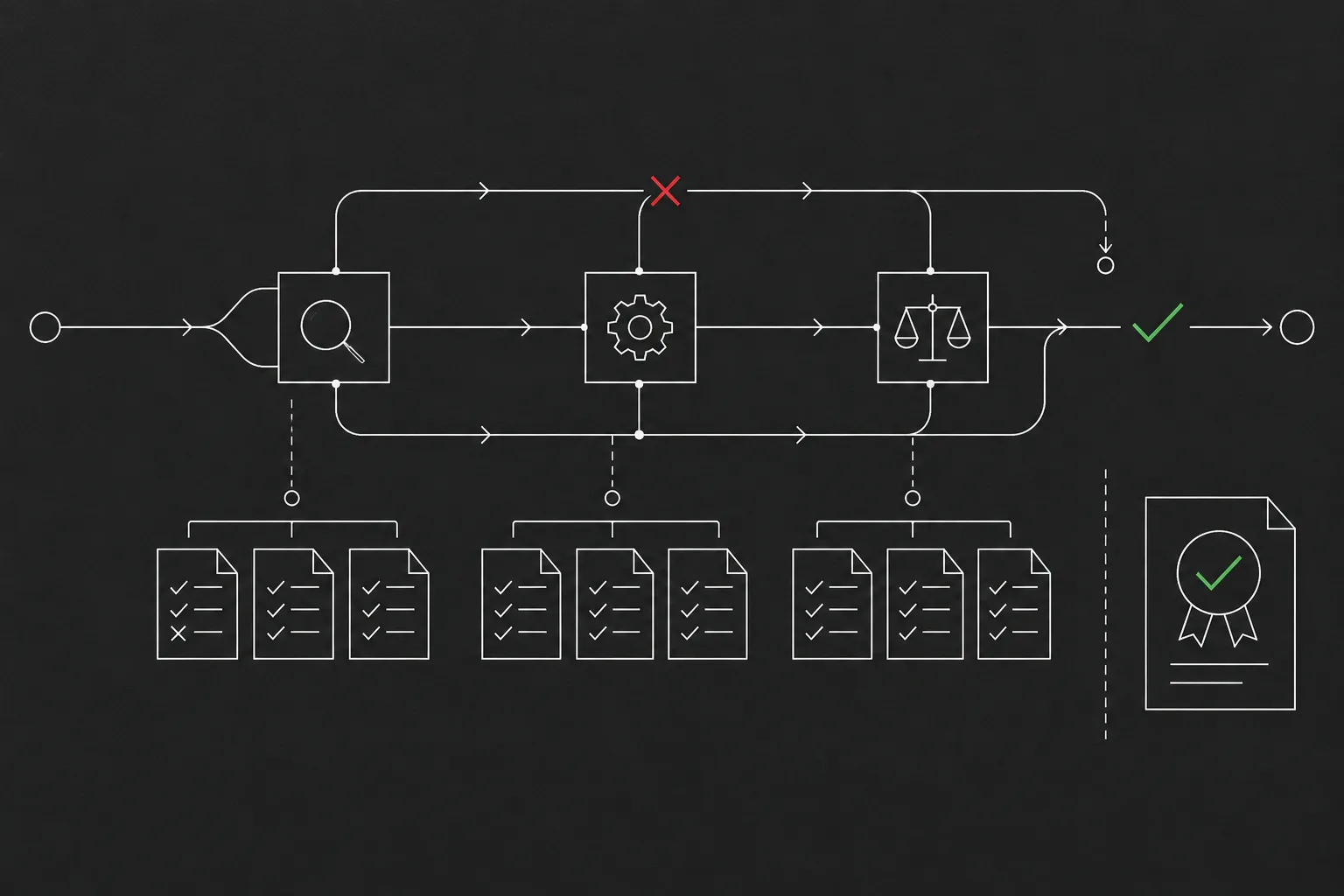
In a hypothetical Hypler engineering assistant evaluation, a team compares two GPT-5 configuration policies against a current route. Every candidate sees the same issue description, repository boundary, test command, untrusted instructions embedded in a fixture, and tool schema. Cases include a request for a concise status, an ambiguous remediation request, a malformed tool argument, and a task that must stop outside its file allowlist. Reviewers measure valid output fields, correct refusal, tool-call parse rate, elapsed time, and review edits. The route with a longer answer does not win merely because it sounds more comprehensive; it must satisfy the defined task contract. This is a hypothetical evaluation pattern, not a claim about deployed Hypler tooling.
The durable comparison
Promotion evidence should retain the family variant, selected controls, channel, fixture revision, output and tool validation, quality score, latency and cost distribution, failure classes, and rollback setting. A change in any selected control should be evaluated where it can affect downstream behavior, rather than folded into an unexplained “model improvement.” OpenAI’s GPT-5 announcement makes configurable responses and tools part of the developer landscape. The practical judgment is to use that flexibility to sharpen task contracts, then let measured baselines—not the promise of a control knob—determine whether a workflow changes.
Hypler analysis
Hypler’s view
Response controls help state a task contract, but they do not guarantee outcome quality or safe tool use. Hypler should test every selected setting against established baselines and keep tool authority outside a model’s own preference.
Hypler technical analysis
Engineering notes
configurable reasoning effort, verbosity, and plaintext custom tools make the task contract more important than prompt style. A developer workflow should specify intended artifact, allowed evidence, required output structure, reasoning budget selected by the application, tool grammar, verifier, and human decision point. Plaintext tools need a parser with explicit delimiters, size limits, typed validation, and service-side authorization; otherwise an apparently simple instruction can blur content and command channels. Model variants should be routed by observed contract compliance, not assumed hierarchy. The article’s propose, verify, decide sequence becomes an evidence chain when the system stores the proposed artifact, verifier result, policy decision, and reviewer disposition separately.
What to inspect
- Task contract
- Inspect intended artifact, permitted evidence, output schema, configured reasoning and verbosity, custom-tool grammar, verifier, and approval owner for one request.
- Plaintext parser adversary
- Test delimiter confusion, oversized content, embedded instructions, missing fields, and type confusion; inspect rejection before tool dispatch and service-side authorization.
- Propose-verify-decide trace
- Review the stored proposal, deterministic or human verifier outcome, policy decision, approved action if any, and final receipt as distinct records.
Scope and limits. The release describes developer controls and API variants; it does not make custom tool text self-validating or substitute for application-specific routing and authorization.
Terms and definitions
- Evaluation
- A repeatable method for measuring a system against defined quality, safety, or task criteria.
- LLM
- Large language model: a machine-learning model trained to predict and generate sequences of tokens.
- Inference
- Using a trained model to produce an output from new input.
- Context Window
- The maximum amount of input and generated content a model can consider in one request.
- OpenAI introduces GPT-4.1 in the API
OpenAI released GPT-4.1, GPT-4.1 mini, and GPT-4.1 nano in the API, describing gains in coding, instruction following, and long-context use.
- OpenAI introduces GPT-4o
OpenAI introduced GPT-4o as a multimodal model family for text, vision, and audio, with rollout and access varying by product channel.
- OpenAI releases the o1 reasoning-model preview
OpenAI released o1-preview and o1-mini in ChatGPT and the API, describing models trained to spend more time reasoning through difficult tasks.
Original source
Historical source briefing with Hypler engineering analysis. Source details reflect the original publication date; implementation examples are hypothetical. Technical analysis expanded October 24, 2026; this does not change the original source event or establish a new source verification. Editorial prose revised October 26, 2026; original event, publication and source-check dates are retained.