DOE announces Genesis Mission awards for super-intelligence science
The U.S. Department of Energy announced 12 Phase II Genesis Mission awards totaling $159 million, six Phase I awards, and a stated first-year portfolio of 297 projects.
By Hypler editorial team · Source: U.S. Department of Energy.
Original source date: .
Hypler publication: . Hypler updated: .
Primary source last checked: .
Source check notes
Primary DOE source checked. Award counts, amount, portfolio count, and project examples are recorded as DOE statements; no breakthrough, commercial, or completed-capacity claim is drawn. Rechecked primary text October 24, 2026; original event and publication dates preserved.
Estimated reading time: 4 minutes.
Topics: Department of Energy, Genesis Mission, scientific computing, energy, fusion, HPC
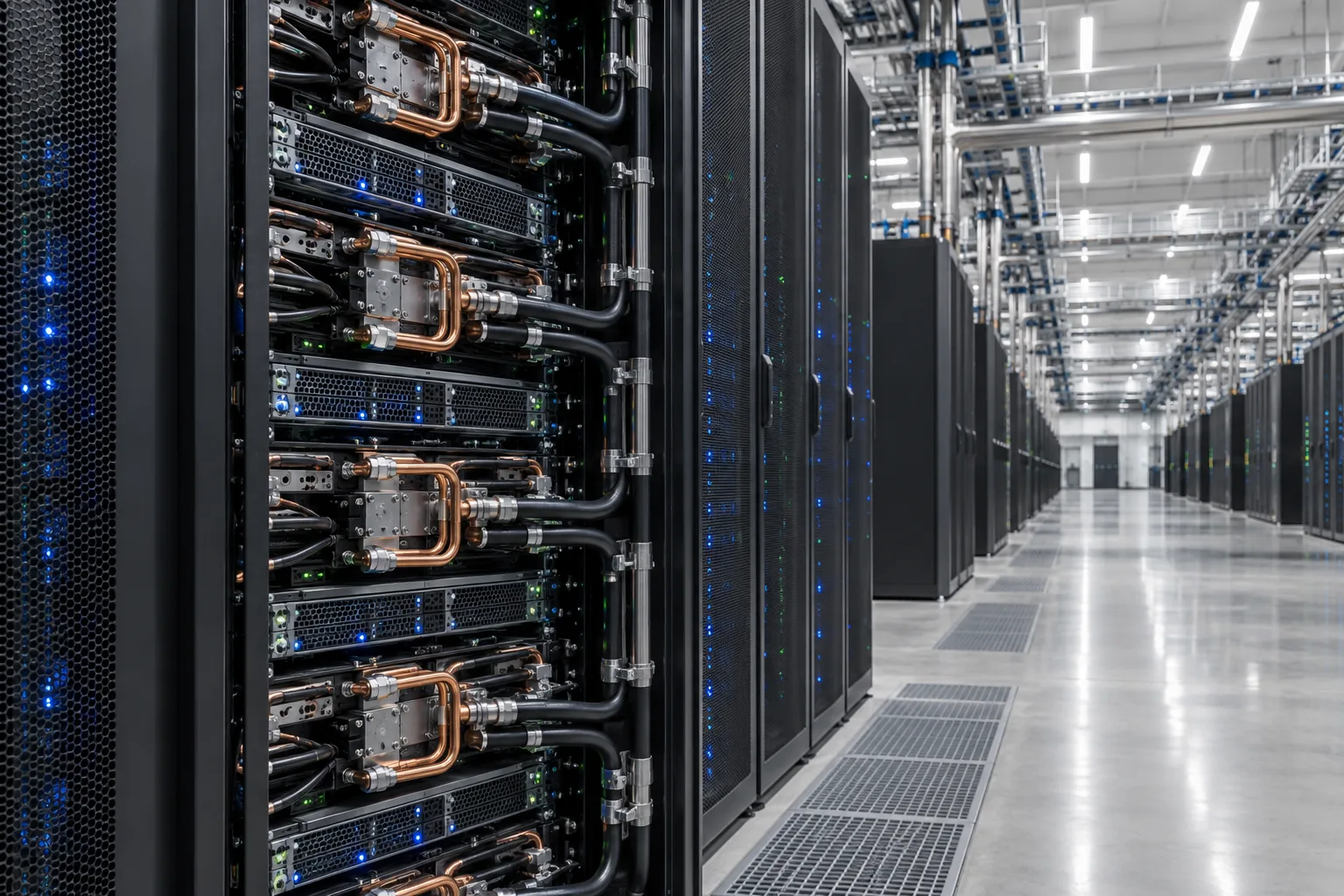
The October 8 record is an awards announcement
The Department of Energy’s October 8 announcement names 12 new Phase II Genesis Mission awards totaling $159 million and six new Phase I awards. DOE says the portfolio contains 297 first-year projects. Named examples include a SPARC fusion digital twin with Commonwealth Fusion Systems, MAESTRO geothermal work with the University of California, Irvine, AXESS rugged chips with Fermilab, and AI4HPC scientific software at Argonne.
These are awards, selections, and research objectives. The announcement does not claim a scientific breakthrough, commercial fusion, or deployed superintelligence. Funding and direction have public significance without becoming evidence of an achieved technical outcome.
Science leadership is a connected public capability
Hypler’s editorial position favors American leadership through lab compute, trustworthy data, energy capacity, scientific software, disciplined measurement, and secure systems. A national program creates more durable value when researchers can move from funded concept to reproducible workflow, compare a model with physical observation, and state remaining uncertainty.
That foundation outlasts a single model, hardware generation, or software stack. It turns public investment toward knowledge that another project can inspect and build upon rather than a claim tied only to the announcement cycle.
Software participates in the measurement instrument
Scientific AI needs the dataset version, preprocessing steps, model configuration, simulation or instrument context, uncertainty method, and interpretation retained with a result. A digital twin can frame a research question; it does not replace the physical experiment. HPC software can accelerate a workflow without making the output self-validating.
Teams need a traceable route from code and data to a measured claim, including failed runs and assumptions that explain the operating range. These records let later reviewers distinguish a genuine observation from a simulation output that needs more evidence.
Awards do not document project delivery
DOE’s announcement provides no independent outcome data for named projects, final software artifacts, experimental validation, energy performance, chip reliability, or commercialization. It does not establish that each selected project has reached a deployment milestone, nor does it show how the stated portfolio count maps to completed work.
Funding level and program scale are context, not substitutes for publication, replication, or a measured scientific result. Holding that boundary permits ambition without asking an award record to carry claims it was not designed to prove.
Project interfaces can make public investment cumulative
Hypler sees an opening for U.S. labs, companies, and universities to state what data can be shared, which models are evaluated, how findings are reviewed, and when a conclusion is ready for wider use. Research exploration should remain separate from operational authority, while provenance survives institutional handoffs.
That practice can make federally supported compute and science software more useful to the next project while protecting sensitive inputs. It ties American leadership to evidence people can examine rather than a funding announcement alone.
Hypothetical geothermal workflow: preserve the negative result
Imagine a lab and university using a learned surrogate to prioritize geothermal simulations before allocating scarce high-performance computing time. The record retains source dataset, instrument and simulation conditions, model-training revision, uncertainty estimate, candidate list, compute allocation, and final physical or higher-fidelity comparison. The surrogate may rank candidates; it does not declare a discovery. Researchers compare selected and rejected cases to learn whether it found useful signals or repeated initial-data bias.
A release package distinguishes directly observed claims, simulations, and follow-up hypotheses. Another group can obtain permitted inputs, rerun the defined software path, and report disagreement without overwriting the original observation; an unshareable data-rights or security limit appears beside the result. The team gives negative and inconclusive findings equal care, preserving allocation evidence and reducing pressure to overstate early signals. This hypothetical approach applies across fusion, geothermal, scientific software, and rugged hardware research. It is not evidence that any named Genesis project uses it.
Hypler analysis
Hypler’s view
Hypler’s editorial view is that American scientific leadership compounds when public research links compute, data, energy, software, physical measurement, and clear limits on what results establish.
Hypler technical analysis
Engineering notes
A research-award portfolio can indicate direction and resourcing while scientific capability emerges only through linked compute, data stewardship, energy systems, scientific software, experiments, and measurement. Award counts and dollars must remain separate from validated outcomes; engineering review needs artifacts that show what was built, tested, measured, and reproduced.
What to inspect
- Award record
- Inspect project phase, stated objective, award amount, responsible institution, period, deliverable framing, and the source record before inferring technical capability.
- Research evidence chain
- Link compute environment, dataset stewardship, software revision, experimental protocol, measurement output, validation method, and reproducibility conditions for a claimed result.
- Outcome review
- Distinguish planned milestones from measured scientific or commercial outcomes; inspect independent validation, limitations, failed runs, and the owner of the next decision.
Scope and limits. DOE's awards and portfolio figures are funding and program records. They do not prove that super-intelligence objectives, fusion, energy, or other research targets have been achieved.
Terms and definitions
- AI Governance
- Policies, roles, controls, and review processes that guide how AI systems are selected, used, monitored, and retired.
- GPU
- Graphics processing unit: a processor designed for highly parallel computation, commonly used for AI training and inference.
- Power Capacity
- The electrical power a facility or system can safely supply to equipment.
- Evaluation
- A repeatable method for measuring a system against defined quality, safety, or task criteria.
- NVIDIA commits UK compute access for agentic safety and security research
NVIDIA says it will commit UK-hosted compute access valued at $250 million across five years for agentic safety and security research.
- NVIDIA frames AI-defined fabs around chip design and manufacturing
NVIDIA frames CUDA-X work with semiconductor partners around AI-enabled chip design and manufacturing, while early-access claims require bounded evidence.
- Executive Order 14434: From AI to Super Intelligence
Executive Order 14434 directs executive-branch terminology from Artificial Intelligence (AI) to Super Intelligence (SI).
Original source
Source briefing. Facts are attributed to the U.S. Department of Energy; Hypler analysis is editorial opinion. Generated illustrations are nonphotographic. Technical analysis expanded October 24, 2026; this does not change the original source event or establish a new source verification. Editorial prose revised October 26, 2026; original event, publication and source-check dates are retained.