Engineering SI capabilities that can change safely
An SI capability is a versioned assembly of instructions, models, context rules, tools, interfaces, dependencies, tests and constraints. A revision records changes to those components and the evaluation inputs used to check the resulting behavior.
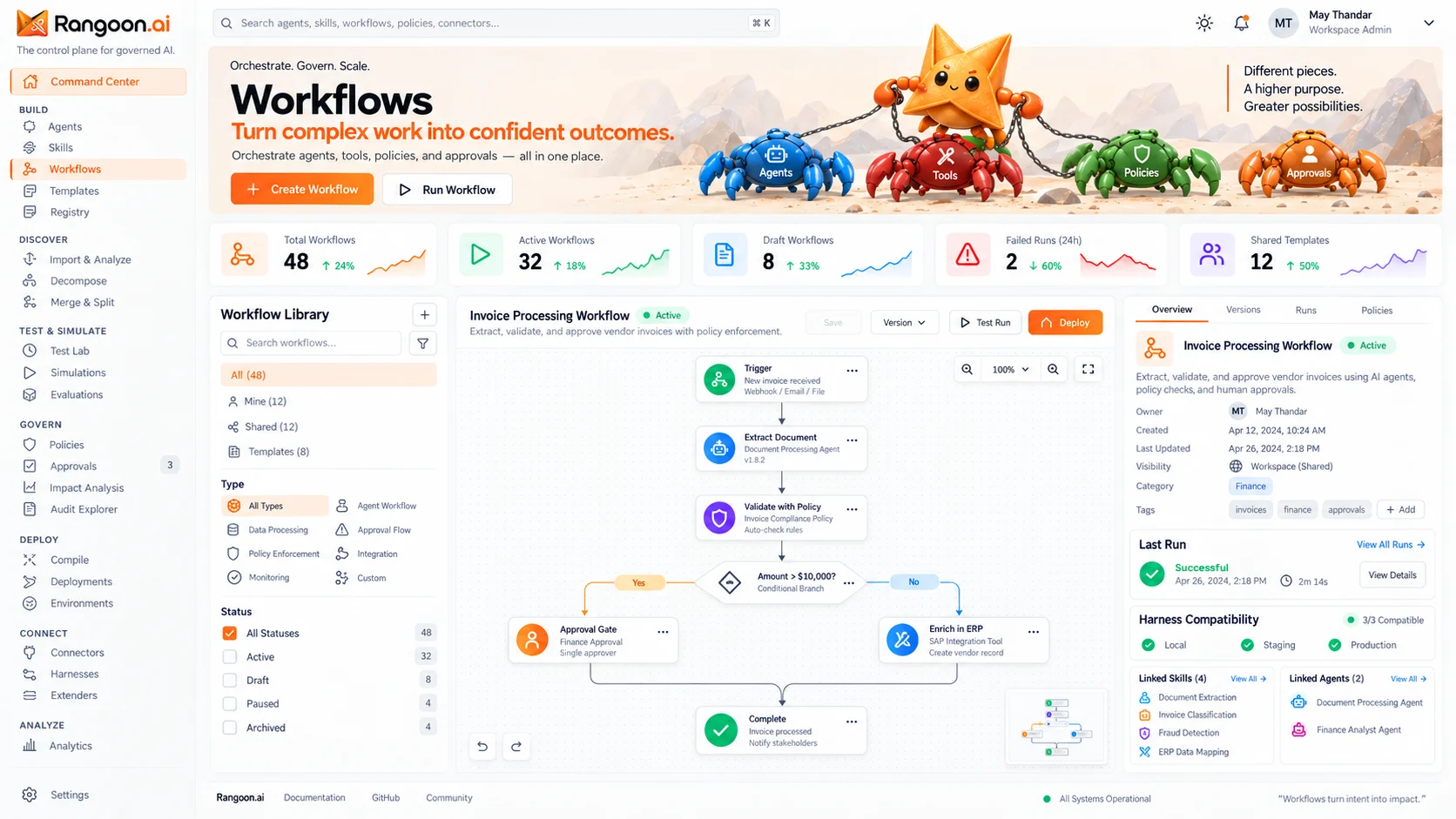
Treat a capability as a versioned assembly
A useful capability record identifies the instructions, selected skills, model target, input contract, output contract, context policy, and declared tool boundary. It makes a specific release intelligible when an operator, reviewer, or future engineer compares it with another release.
Version identity should represent the assembled artifact, not only a file name. When instructions, dependencies, allowed tools, or evaluation inputs change, the resulting capability needs a new reviewable identity.
Make dependencies visible before composition
A workflow can depend on sources, interfaces, model settings, reusable skills, and target-specific constraints. If those relationships remain implicit, an apparently small change can silently widen access, remove an input check, or make an evaluation irrelevant.
Composition records what is included. Decomposition separates a broad workflow into smaller units with clear inputs, outputs, and owners. Installation and availability receive their own operational evidence.
Use evaluation as executable evidence
A test is useful when it covers the decision the capability is expected to make: extracting a field, refusing an unsupported request, selecting evidence, producing a constrained output, or surfacing missing context. Evaluation inputs should be versioned alongside the capability so a later score still has a meaningful reference point.
Evaluation provides bounded evidence about stated cases and exposes the gaps that still need human review, interface validation, or operational controls.
- Known input and output contract
- Expected refusal and unknown cases
- Versioned fixtures or evidence sets
- Reviewable result and failure notes
Compile a preview, then plan a target
Compilation can resolve a selected capability into the exact inputs, dependencies, policies, and target assumptions a deployment plan would need. A preview is a planning artifact: it helps a team inspect what would be represented before any release or external action is considered.
Target planning includes compatibility, credentials, release, and operational judgment. A compiled preview records the selected capability inputs and target assumptions for review.
Separate capability from authority
A capability can describe how a connector might be used. The system that owns the consequence authorizes the exact requested operation, actor, target, scope, and applicable policy.
This separation keeps configuration changes from silently becoming access changes. It also gives teams a clean boundary between the workspace that manages capability and the authority layer that governs consequential action.